Remove visual noise.
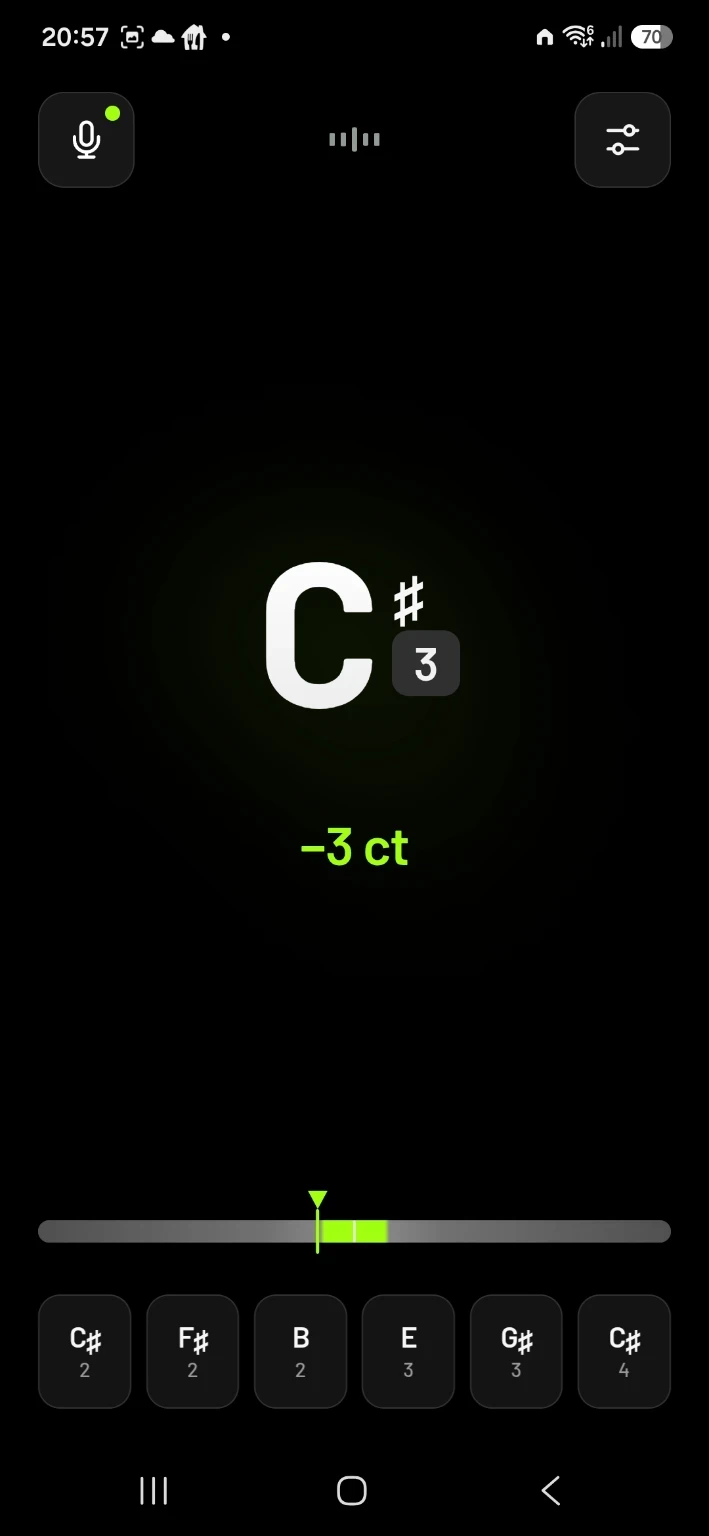
No decorative instrument or illustrated strings. The detected note, signed cent deviation and a compact meter get visual priority.
A personal Android guitar tuner I designed and built for myself. No ads, no distracting visuals — just pitch feedback and a clear next adjustment.
Explore the interface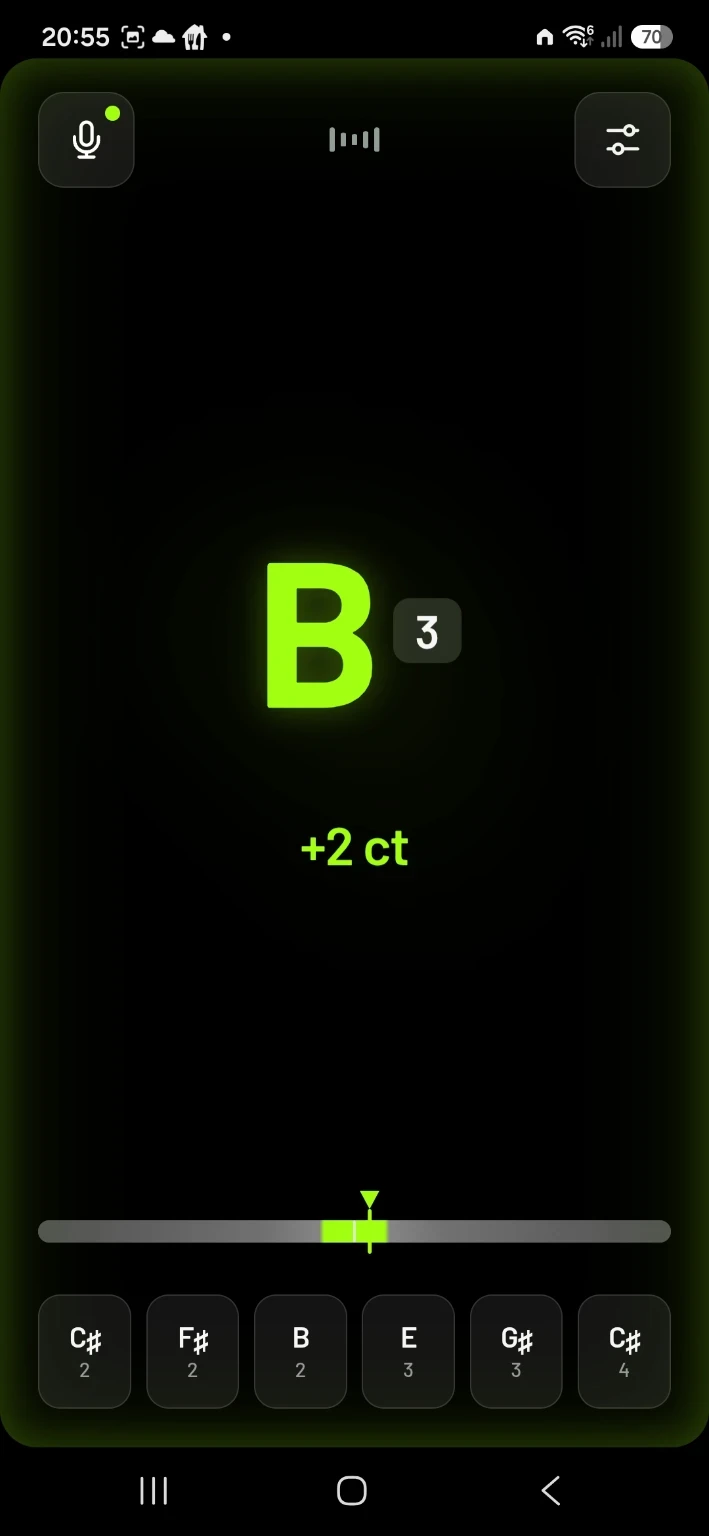
When I used guitar tuners, I often found instrument graphics, string illustrations and decorative elements competing with the information I actually needed. Some apps showed the detected note, but gave me less direct guidance about how far I was from my chosen string’s target pitch — and which direction to adjust.
There was another interruption: ads, waiting screens or paid features could get between opening an app and tuning a guitar. For a task I repeat constantly, even that small friction mattered.
My goal: build a simple tuner for my own use, without ads or paywalls. It should show the current pitch clearly, make tuning presets quick to access, and turn a selected string into actionable guidance.
These are decisions I made to solve frustrations I experienced firsthand, not findings from a formal competitor study.
No decorative instrument or illustrated strings. The detected note, signed cent deviation and a compact meter get visual priority.
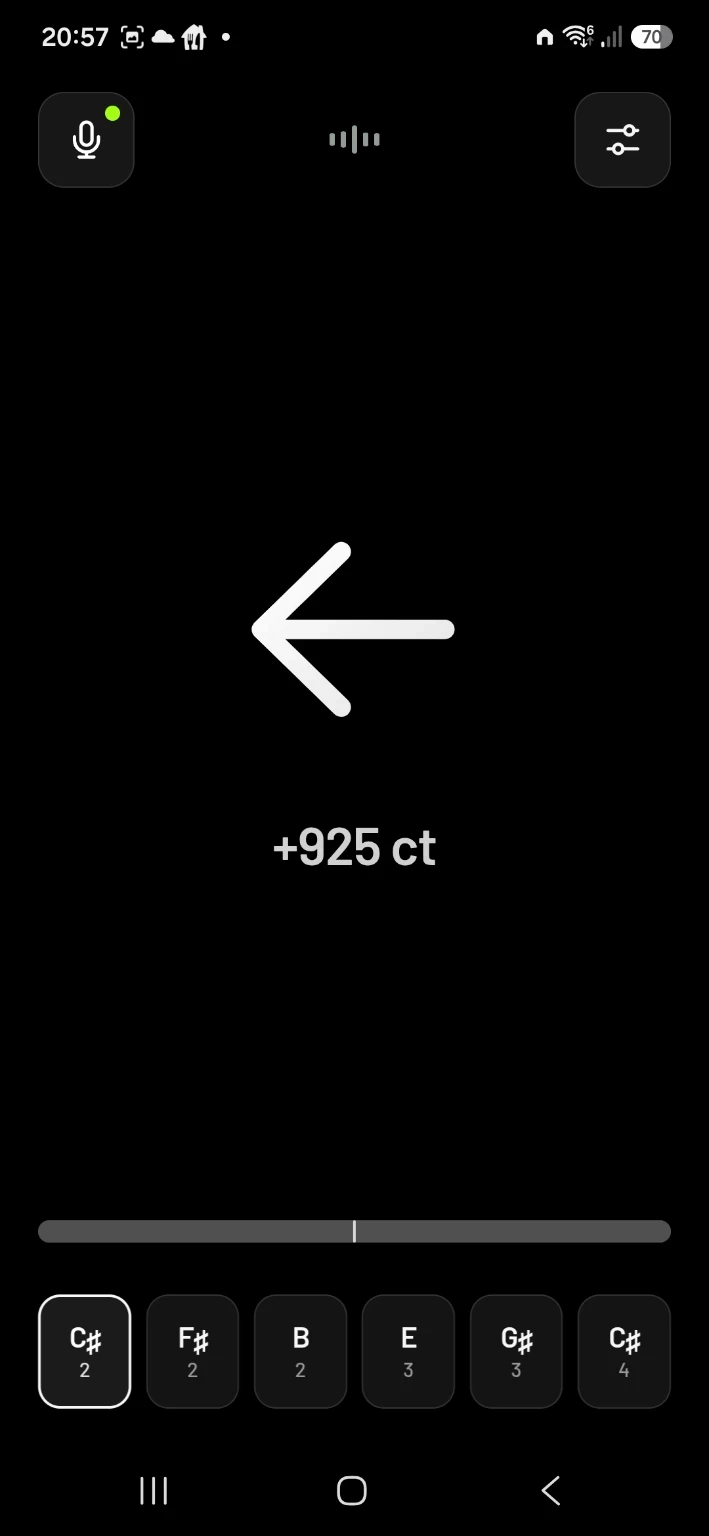
Once a tuning and string are selected, a prominent arrow shows the adjustment direction while the cent value indicates the distance from that string’s target pitch.
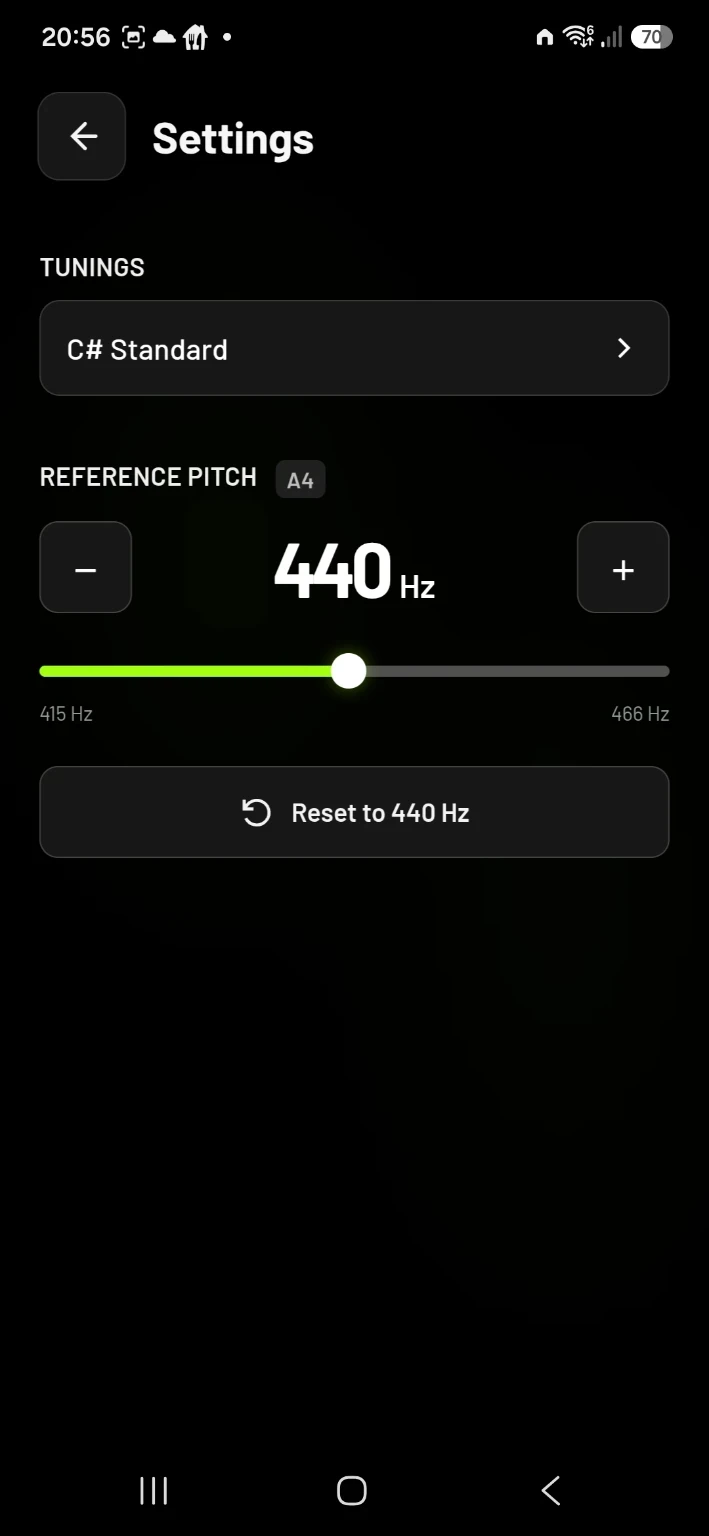
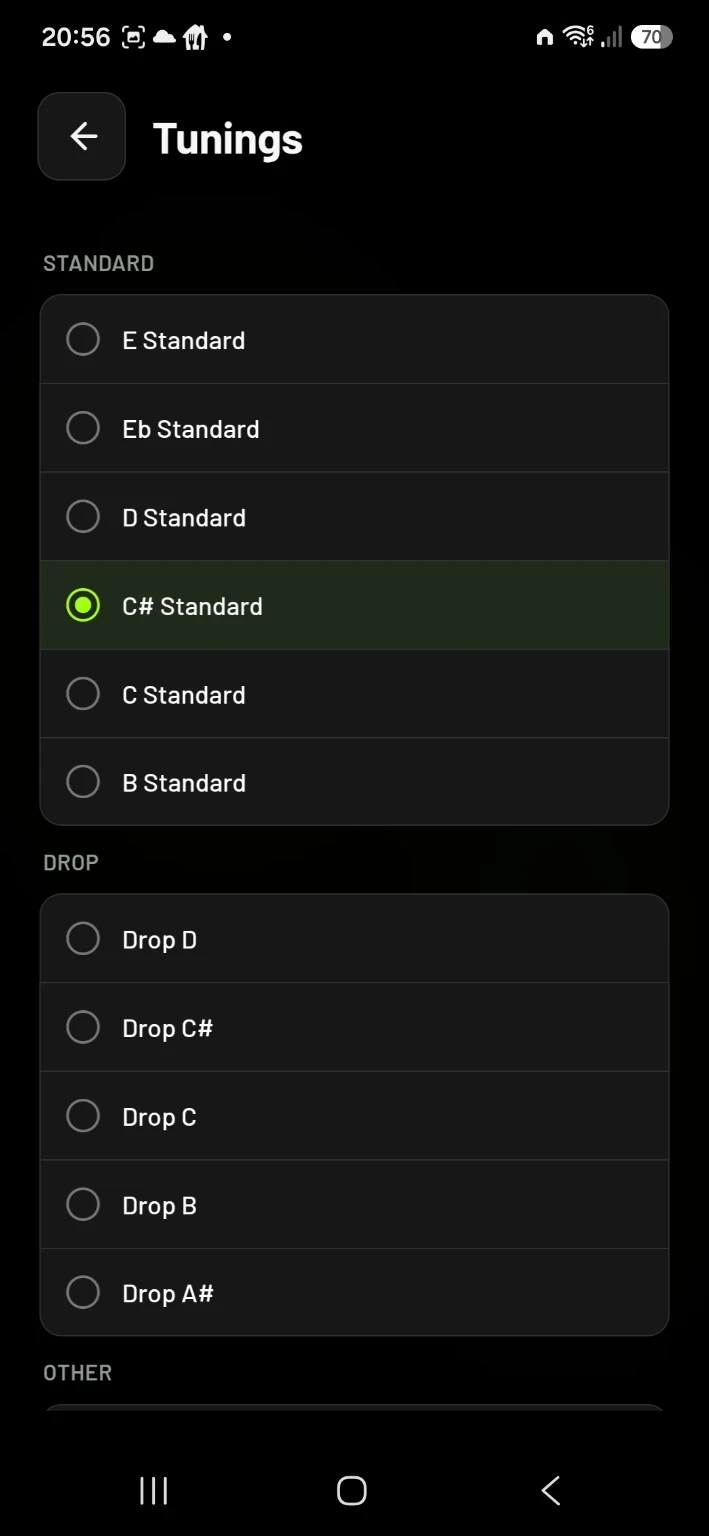
Standard and drop tunings are grouped into easy-to-scan lists, with a clear selected state. Reference-pitch controls stay in settings instead of distracting from tuning.
No ads, subscriptions or waiting screens. I built the app so I could open it and start tuning immediately.
I developed InTune independently, from identifying the problem and defining the interaction model through to a working Android app for my own use.
I used AI tools throughout the development process — not just for early prototypes, but also to implement, refine and turn the concept into an Android app I could actually use. I defined the problem, made the product and interaction decisions, and guided the iterations. AI helped me build the working software; I did not write every part of the implementation unaided.
The project is complete for the use case I set out to solve. It was never intended as a public launch or a commercial tuner.
Actual interaction demos and five screens from my finished Android app — from automatic pitch detection to manual guidance and tuning presets.
InTune is a completed Android app I created for my own guitar practice — not a commercial product or a public app-store release. I have not conducted a formal comparative usability study or measured improvements in tuning speed.